The Airbnb Mid Term Rental Play for Slow Seasons
Every short-term rental owner eventually hits the same wall. Peak season is great. The shoulder season is fine. And then there is that stretch of the calendar where you are doing eight turnovers to earn what one good football weekend brought in, and you start wondering whether the whole thing is worth the laundry. An airbnb mid term rental is the answer most owners arrive at eventually, usually after one brutal February.
It is not a downgrade. It is a different product sold to a different buyer, and the operation behind it is dramatically lighter.
Five years in, running 60-plus rentals across Central Iowa, the owners with the steadiest income are almost never the pure short-term operators. They are the ones running a hybrid.
Where the 30-day line comes from
Thirty days is not an arbitrary number. It is where several things change at once, and that is exactly why the category exists.
Lodging tax treatment often shifts at or around that mark. Platform fee structures change. Airbnb's own monthly stay rules apply a different cancellation and payment schedule. And in a lot of jurisdictions, short-term rental regulations stop applying to stays past a certain length, which is occasionally the entire reason an owner moves this direction.
That last one is worth a conversation with someone local. I am not giving you legal or tax advice, and you should not read it that way. But if your city has rules that make short stays difficult, the mid-term window is frequently where the workable option lives, and it is cheap to ask before you commit.
The actual math, honestly
Your effective nightly rate on a 60-day booking will be well below your weekend rate. Anyone who tells you otherwise is selling something. The case for it lives entirely on the cost side.
- One turnover instead of eight or more. If your cleaning cost is meaningful, and it is, this is the single biggest line item that disappears. Our breakdown of the Airbnb cleaning fee has the numbers to plug in.
- Supplies collapse. Paper goods, coffee, soap, laundry detergent. A monthly guest buys their own after week one.
- Linens last longer. Fewer wash cycles means slower replacement, and towels are a quiet recurring expense most owners underestimate.
- Almost zero messaging. After the first three days, a monthly guest goes quiet. Compare that to eight separate arrival sequences.
- No gap risk. A booked month is a booked month. No orphan nights, no last-minute discounting, no checking the calendar on a Tuesday.
Compare the two scenarios on revenue per available night with cleaning and supplies included, the way our Airbnb pricing strategy guide lays out. For a lot of Central Iowa properties in January, February, and the gap between the state fair and football, the mid-term booking wins outright.
You are not choosing between a high rate and a low rate. You are choosing between a high rate you might not get and a lower one you definitely will.
Before you switch to 30-night stays, check the math both ways. Our free short term rental calculator shows what the short-stay version of your home earns, so you can compare it to a monthly rate.
Who books 30 to 90 days
This demand is real and it is boringly consistent. Travel nurses and allied health staff on 13-week contracts. Project crews on commercial builds. Consultants and auditors, which in Central Iowa often means insurance work. Families between houses after a sale closed faster than the purchase. People out of their home after an insurance claim. Graduate students and visiting faculty. Relocating employees in temporary housing while they house hunt.
Notice what they have in common: none of them are on vacation. They are working, and they want the place to be quiet, functional, and uncomplicated. If you want the Des Moines-specific version of who these people are and where they work, our guide to corporate housing in Des Moines goes deeper.
What you have to change about the property
Less than you think, but the changes are not optional.
- A real workspace. A desk or a proper table, a chair someone can sit in for six hours, and a lamp. This is the number one reason a mid-term inquiry goes elsewhere.
- Internet that genuinely works. They are on video calls from your kitchen. Test it, know the actual speed, and put the number in your listing.
- In-unit laundry. Close to mandatory past two weeks. If you do not have it, be upfront, because discovering it in week one is a problem.
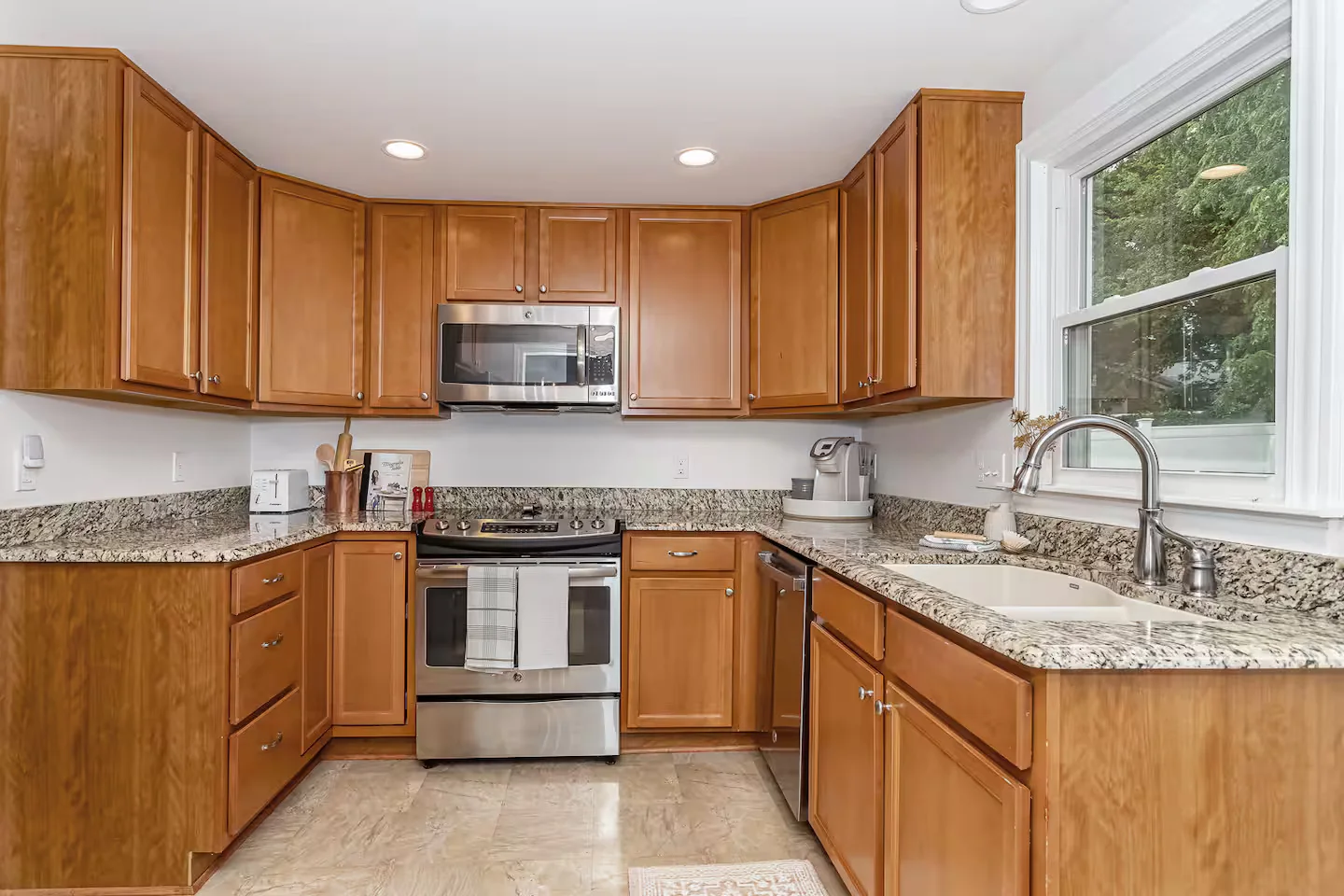
- A kitchen for cooking, not reheating. Sharp knives, real pans, a cutting board, storage containers, enough counter space to make dinner.
- Storage they can use. Empty drawers, empty closet space, and hangers. Nobody lives out of a suitcase for two months.
- Parking that is simply handled. Not a permit they have to figure out.
Things you can stop doing: the welcome basket, the local attractions binder, the decorative throw pillows. Spend that money on the office chair.
Where to list
Turn on monthly discounts on Airbnb and Vrbo first, because that alone changes which searches you appear in. Then rewrite your opening lines to use the words people search: monthly, extended stay, relocation, travel nurse, furnished. Then add Furnished Finder, which is inexpensive and is where healthcare travelers genuinely look.
Longer term, the relationships are worth more than the listings. Local relocation coordinators and insurance adjusters keep short lists, and getting on one is how the bookings start arriving without you doing anything.
The risks worth naming
Two things to go in with your eyes open about.
First, a long enough stay can start to resemble a tenancy, which carries different rules than a guest booking and can make removing someone genuinely difficult. Know where that line sits in your jurisdiction before you sign a 90-day arrangement, and word your agreement accordingly.
Second, screen more carefully than you would for a weekend. You are handing someone your property for months. Verified identity, a reason for the stay that makes sense, and a conversation before you accept. The upside of mid-term is that you have time to be picky, because these bookings are usually arranged weeks out rather than hours.
Try it on one property, in your worst month. That is a low-stakes test and it answers the question faster than any spreadsheet will.
Airbnb Mid Term Rental FAQ
What is a mid term rental?
A furnished stay of roughly 30 to 90 days, booked by someone working or relocating rather than traveling for leisure. It sits between nightly short-term rentals and a traditional year-long lease, and it is usually used to fill the months when short-stay demand is weak.
Do mid term rentals make less money than short term?
The nightly rate is lower, but the cost side changes enough that it often wins in slow months. You run one turnover instead of eight or more, buy far fewer supplies, wash fewer linens, and spend almost no time messaging. Compare on revenue per available night with those costs included.
Why is 30 days the cutoff?
Several things change around that mark at once. Lodging tax treatment often shifts, platform payment and cancellation rules differ for monthly stays, and in many places short-term rental regulations stop applying past a certain length. The specifics are local, so it is worth asking before you commit.
What do I need to add for mid term guests?
A real workspace with a usable chair, internet you have actually speed tested, in-unit laundry, a kitchen equipped for cooking rather than reheating, empty drawers and closet space with hangers, and simple parking. You can skip welcome baskets and local attraction guides entirely.
Can a long stay turn into a tenancy?
In some jurisdictions, yes, and that brings different rules than a guest booking, including a harder process for removing someone. Find out where that line sits locally before agreeing to a 90-day stay, word your agreement accordingly, and screen more carefully than you would for a weekend booking.